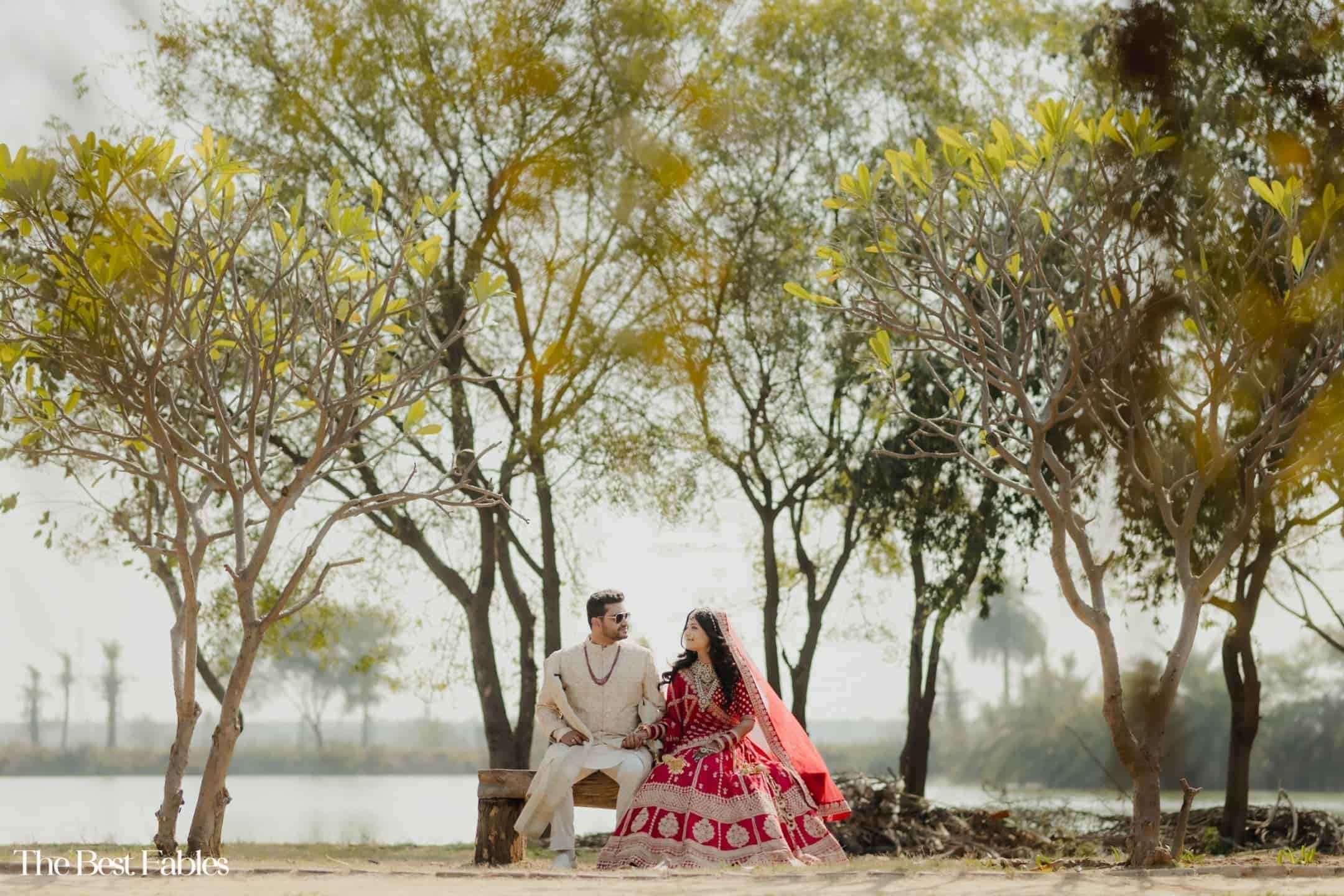
NRI Wedding Planning Checklist: How to Plan an India Wedding While Living Abroad
How NRI couples can plan a full India wedding from abroad — one trip to finalise the vision, everything else handled on the ground.

The hardest part of planning an India wedding from abroad usually isn't any single decision — it's the sheer number of small ones, stacked on top of a time difference that means every question takes a full day to get answered. Couples end up on 11pm calls trying to pick between two marigold shades, or flying back to India three or four times just to see venues they could have walked through on video. It doesn't have to work that way. With the right planner, most NRI couples come to India once — to walk the venue, feel the space, and lock the overall vibe — and everything else gets handled while they go back to their normal lives.
NRI weddings don't all look the same
Before getting into how the process works, it helps to name something that often gets flattened into one assumption: not every NRI wedding is the same shape. Sometimes both partners live abroad and so does most of the friend circle, which means visa timelines and travel logistics matter for a large chunk of the guest list. Just as often, though, it's really only the couple who lives abroad — parents are in India, most of the guest list is in India, and it's a handful of close friends flying in from wherever the couple has settled. That second version is actually far more common than people expect, and it changes what "planning remotely" really means. In that case, the couple isn't coordinating an entire wedding from a distance so much as staying looped into decisions their parents are already halfway through making on the ground — which is its own kind of tricky, because now the planner has to keep two audiences in sync instead of one.
Either way, the underlying need is the same: someone local who can be the constant presence, so the couple isn't the only thread holding vendors, family, and decisions together.
What actually needs you there in person — and what doesn't
Here's the honest answer: almost nothing needs you physically present except the things that involve trusting your gut. Choosing a venue is one of them — no video call fully replaces standing in a space and feeling whether it's right. Getting a sense of the overall look and mood for the wedding is another; once a couple has walked a property, seen the light in the evening, and talked through the vibe in person, a good planner can run with that instinct for months without needing to check back in for every small call.
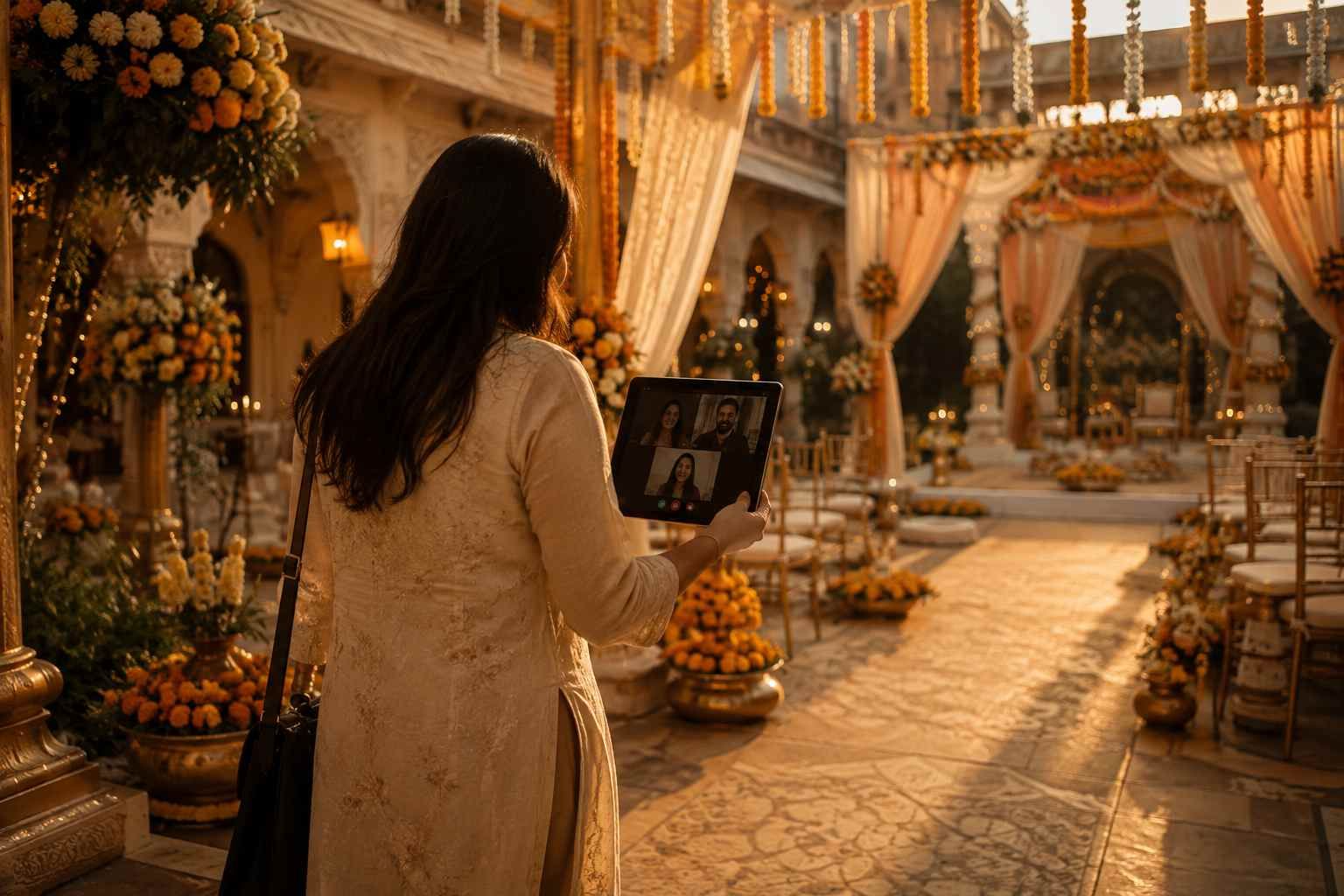
Almost everything else — vendor selection, décor finalisation, catering tastings (which can often be recorded and shared), outfit shortlisting, logistics, timelines — can be managed entirely through calls, shared documents, and video walkthroughs. We've planned full weddings for couples who came to India exactly once before the wedding week itself: once to lock the venue and the vision, and then again to get married. Everything in between happened over WhatsApp, video calls, and a planner who was physically present at every vendor meeting they weren't.
How the remote planning process actually works
Once the venue and vibe are locked, the rhythm usually looks like this: a weekly or biweekly call, scheduled around the couple's evening rather than the planner's, where decisions get batched instead of trickled out one at a time. Instead of ten small WhatsApp messages a day, couples get a short video walkthrough when a vendor space is finalised, a moodboard to react to, or two or three curated options instead of an overwhelming list to sort through themselves. The goal is to protect the couple's time and headspace — they should be excited to open updates from their planner, not dreading another decision to make at midnight.
Good planners also build in a buffer for the time difference itself. If a couple is in the US or UK, that's often a 9 to 12 hour gap from India — which means a same-day answer becomes a next-day one unless everyone plans around it. The planners who do this well send updates before the couple's day starts, so there's already something waiting for them to respond to when they wake up, rather than losing a full day to the lag.
Choosing a planner who's actually built for this
Not every planner who says "we do destination weddings" has actually built their process around NRI clients, and it shows the moment communication starts. A few things worth asking before you commit:
- Have they planned weddings for couples who live where you live, and can they show you how that communication actually went?
- Will you have one point of contact, or will you be juggling separate coordinators for décor, catering, and logistics?
- Do they send video walkthroughs and voice notes, or just static photos and long email chains?
- Are they comfortable scheduling calls around your time zone, consistently, not just for the first few weeks?
- Can they run vendor negotiations and site visits without you needing to be there — meaning they have real, established relationships on the ground, not just a vendor list they're calling for the first time?
The right answer to all five isn't a nice-to-have. It's the entire reason a remote wedding stays enjoyable instead of exhausting.
Money, without the back-and-forth
This part tends to worry couples more than it needs to. In families where parents are in India, a lot of the day-to-day vendor payments naturally happen locally, with the planner managing schedules and negotiations so nobody's chasing receipts across time zones. When the couple abroad is funding things directly, the simplest approach is sending funds through proper banking channels into an account set up for exactly this, with a clear, shared tracker of what's been paid and what's pending — no cash changing hands informally, no confusion about who owes what. A planner who's done this before will usually already have a system for it, which takes one more thing off the couple's plate entirely.
What actually eases the process
If there's one thing that changes an NRI wedding from stressful to genuinely enjoyable, it's this: the couple should only ever be making the decisions that need their taste and their instinct — the venue, the vibe, the big calls — while everything else moves forward without them having to hold it all in their head. That's not a lower level of involvement in your own wedding. It's the opposite. It's what lets you actually enjoy planning it instead of feeling like a full-time coordinator on top of your regular life.
At Bonvera Weddings, this is the exact model we've built our process around — because we know what it's like to plan a wedding while everyone involved is scattered across different time zones. Come to India once, tell us what feels right, and let us take it from there. If you're planning your wedding from abroad, we'd love to show you how simple that first visit can actually be.